What to wear and how to prepare for your corporate headshot
Clothes, colours, glasses, make-up, hair and posture: everything worth knowing before your company or LinkedIn photo, with a do and don't list.
By Juanjo Vega Santa-Cruz · Noomadik
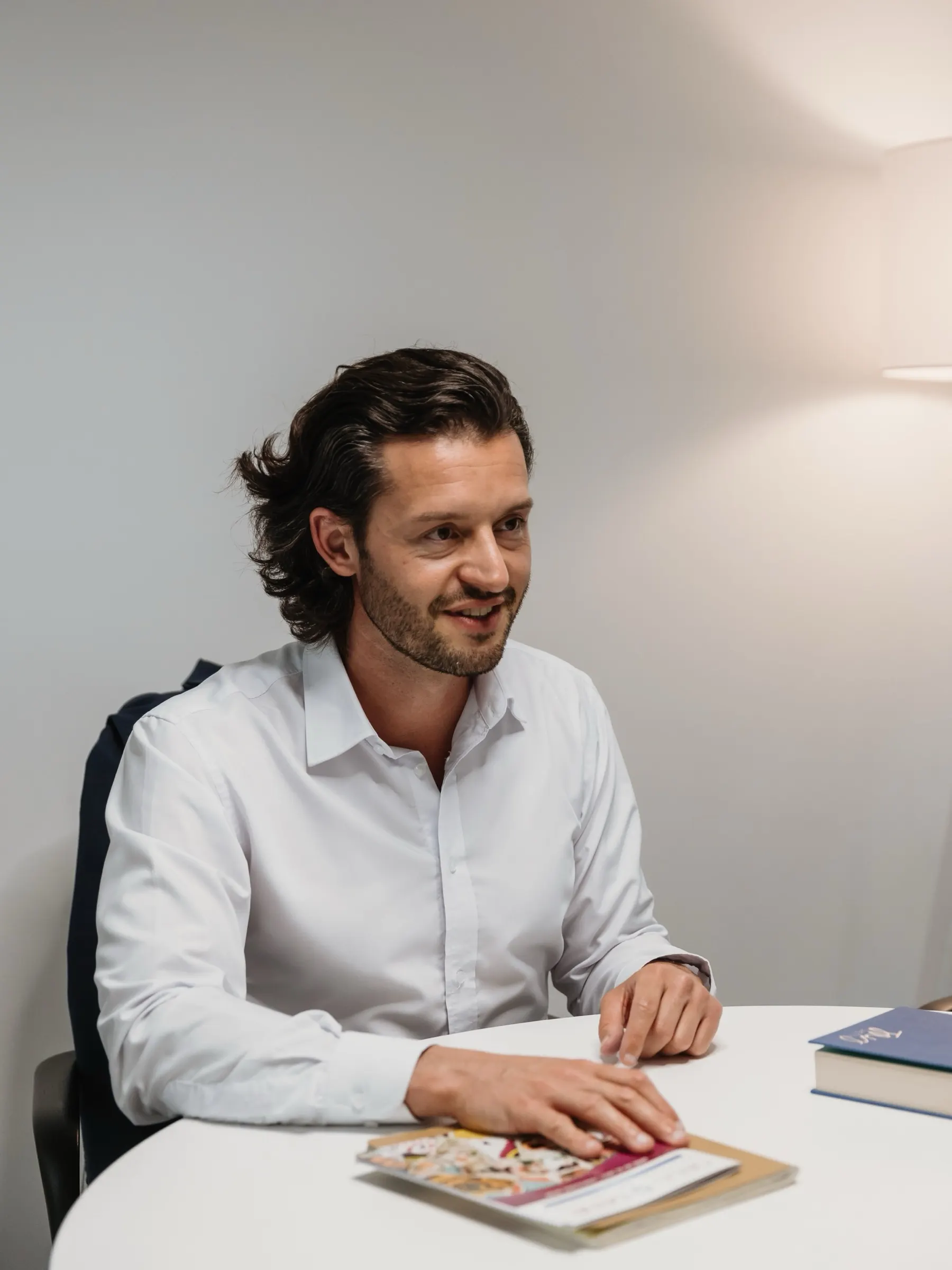
A good corporate headshot doesn’t need a makeover: just come as you would to an important meeting. This guide is designed for your company to forward to you a few days before the shoot. It takes five minutes to read and answers the most common questions about clothes, colours, glasses, make-up, hair and nerves.
Clothes
The general rule
Wear what you would wear to an important client meeting. No more and no less formal than you are at work. If nobody at your company wears a tie, there is no need to start that day; if you always wear one, wear it.
Choose something you feel comfortable in and that fits well at the shoulders. A headshot mainly shows your neck, shoulders and chest, so that is what matters.
Colours that work
- Plain, mid-tone colours: navy, grey, dark green, burgundy, beige or earthy tones.
- White and black work better combined with another garment (a blazer over a white shirt, for instance) than worn on their own.
- If the company is using a coloured background, avoid clothes in the same shade so you don’t blend into it. Ask beforehand what the background will be.
What to avoid
- Small patterns, fine checks and narrow stripes: they shimmer on camera and create a strange effect.
- Large logos and text on clothing, unless they are your company’s own and that has been agreed.
- Neon colours, which cast a tint on your face.
- Badly creased clothes. If you can, bring your shirt or blazer on a hanger and change at the office.
A practical tip: bring a second option, such as a top in another colour or a jacket. If something doesn’t work with the background, it can be swapped in a minute.
Glasses, accessories and details
Glasses
If you wear glasses every day, keep them on: that is how people recognise you. The photographer positions the light and adjusts the angle to avoid reflections. The only thing to avoid is lenses that darken in light, as they can tint under the lights. If in doubt, photos can be taken with and without them.
Accessories
Keep them understated: a watch, small earrings or a simple necklace. Large or very shiny pieces draw attention away from your face.
Details that show
- Check your collar and shoulders for hairs, fluff or visible labels.
- If you wear a tie, make sure the knot is neat and centred.
- Empty your jacket pockets, especially of your phone.
Make-up and skin
- If you usually wear make-up, do it as you would for a working day, perhaps with a little more care. Natural tones and a matte finish work best.
- If you don’t wear make-up, there is no need to start now. Mattifying powder or blotting papers help remove shine from the forehead and nose, for men too.
- Moisturise the night before and on the day, especially your lips.
Retouching afterwards is natural: temporary details such as redness or a spot are corrected, but nobody’s face is changed.
Hair and beard
- Don’t get a haircut the day before. Ideally, have your hair cut or your beard trimmed a few days beforehand, so it doesn’t look freshly done.
- Wear your hair the way you normally do. The photo has to look like you.
- If you have a beard, make sure it is trimmed and defined. If you shave, do it on the morning of the shoot.
- Bring a comb or small brush for a quick touch-up just before your slot.
Posture and expression
Most people don’t feel comfortable in front of a camera, and that is completely normal. Part of the photographer’s job is to guide you and help you relax. Even so, these tips help:
- Sit or stand with a straight back, but not stiffly. Shoulders relaxed and down.
- Bring your chin slightly forward, as if you were about to greet someone. It defines the jawline and looks more natural than it feels.
- Turn your body slightly and look at the camera. It looks less rigid than facing straight on.
- Smile with your eyes. Think of something or someone that amuses you; a forced smile shows.
- Breathe before each shot. It sounds silly, but it relaxes your face.
Handling nerves
- Arrive a few minutes early for your slot, so you don’t walk in rushed.
- Look at a photo on the screen: the photographer will show you how it is going and you will see there is nothing to worry about.
- You don’t need to get it right first time. Several shots are taken and the best one is chosen afterwards.
- If there is something you don’t like about yourself in photos (a profile, a smile), tell the photographer. They will take it into account.
Quick checklist for the day
Do:
- Client-meeting clothes, in plain colours and mid tones.
- A second top in another colour.
- Glasses, if you wear them every day.
- Comb, mattifying powder or blotting paper.
- Arrive a few minutes early.
Don’t:
- Small patterns, fine stripes or small checks.
- Logos and neon colours.
- A haircut the day before.
- Large or very shiny accessories.
- Arrive with no time to spare.
If you want to see how the shoot is organised from the company’s side, we explain it in LinkedIn headshots for your whole team.
To sum up
A good corporate headshot takes very little: clothes that suit you, a relaxed expression and someone behind the camera who knows how to guide you. If you are organising portraits for your team, see our corporate portraits in Barcelona page or request a quote.