Corporate event venues in Barcelona and how they look in photos
Congress centres, hotels, historic buildings, warehouses, rooftops and outdoor venues: the light in each one and how to make your event photograph well.
By Juanjo Vega Santa-Cruz · Noomadik
The venue you choose for your event decides much of how the photos will turn out. Light, colours, the size of the room and even mirrors or screens all change the result. This guide looks at the most common types of venue for corporate events in Barcelona, with examples of places where we have worked, and what to prepare in each case.
It is not a list of venue recommendations, but a way to anticipate which photos you will be able to get in each one and how to help the photographer.
Congress and exhibition centres
Large venues such as Fira de Barcelona (Montjuïc and Gran Via) or the CCIB host congresses, trade shows and conventions for thousands of people. At Fira Gran Via we have covered, for example, the Huawei stand at MWC and the Italy pavilion at Smart City Expo. Outside Barcelona, a similar case is PortAventura Business & Events, where Digital Science held its annual company meeting.
The light: artificial, often with very high ceilings and a mix of fluorescent lights, stage spots and LED screens.
What to watch:
- Dark stages with a brightly lit speaker: handled well, they give great photos; handled badly, burnt-out faces and an audience lost in black.
- LED screens that show banding or blow out if the exposure is wrong.
- Distances: in large halls the photographer needs to reach the stage without disturbing anyone, so it helps to know in advance where they can move.
Tip for organisers: ask the technical team to keep some light on the audience during talks. Photos of a full room and people listening are among the most used afterwards.
Hotels
Many corporate events take place in hotel function rooms: mid-sized congresses, conventions, company dinners. We have worked, for example, at Battery Innovation Days at the Barceló Sants, in the gardens of Torre Melina, a Gran Meliá Hotel, and on the terrace of the ME Barcelona for the GQ Creativity Awards.
The light: indoor function rooms tend to be warm and sometimes dim; gardens and terraces depend on the time of day.
What to watch:
- Mixed light: warm lamps, cool screens and window light all at once. It can be corrected, but the less mixing, the better.
- Mirrors and glass, common in hotel rooms, which reflect the photographer or the flash.
- Carpets and neutral walls, which add little: set design, signage and brand details matter more here.
Tip for organisers: if there are several rooms (plenary, breakout rooms, coffee area), send the photographer the hotel floor plan with the timings for each one.
Historic and unusual venues
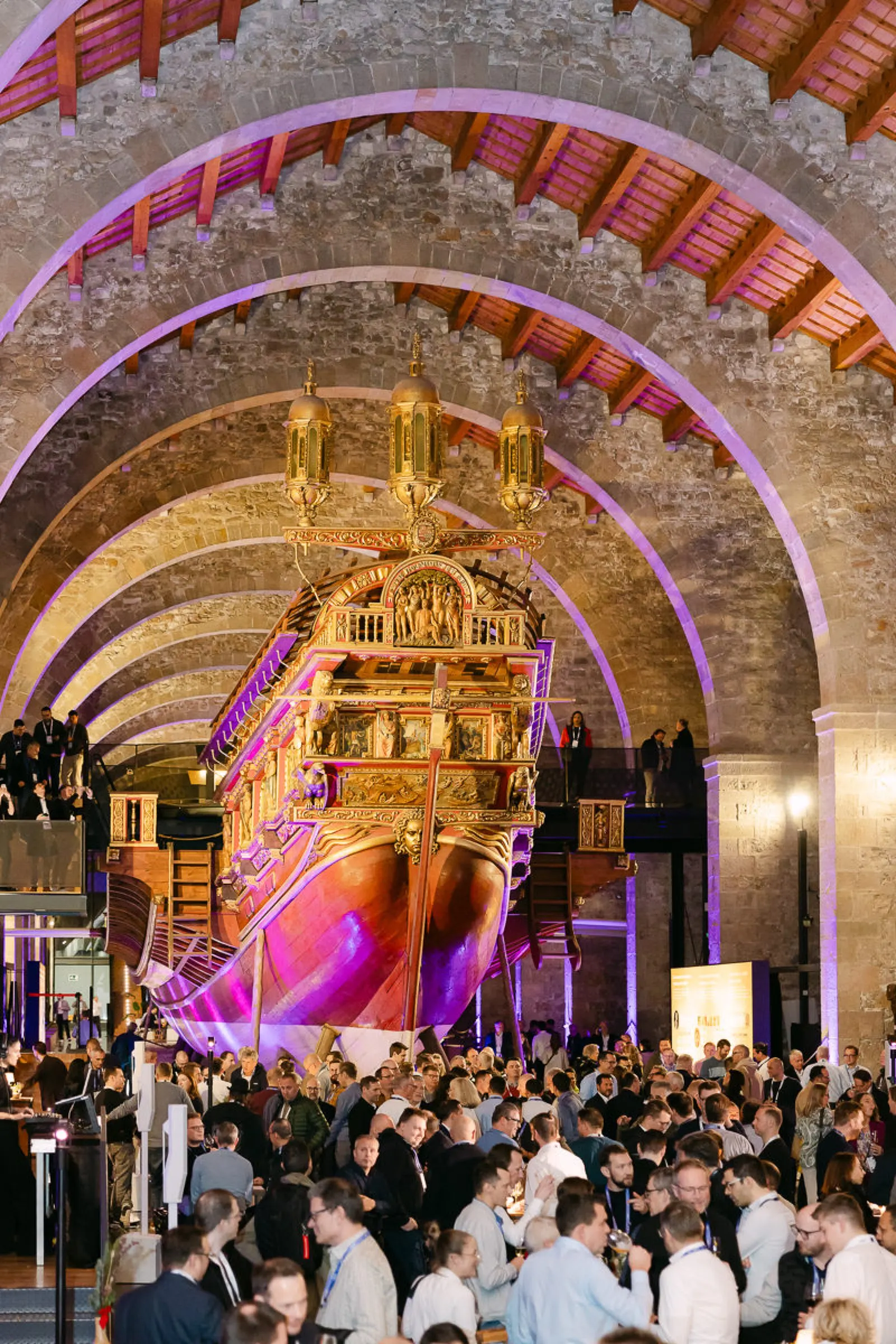
Buildings with history give photos real character, and the venue becomes part of the message. Examples from our portfolio include the client event for HPE and Intel in the Drassanes of the Museu Marítim and the European Commission’s S3 forum, held across several rooms of a historic building.
The light: highly variable. High ceilings, stone, wood and large windows with daylight that changes through the day.
What to watch:
- Venue rules: some buildings restrict flash, access to certain areas or where equipment can go.
- Contrast between very dark areas and bright windows.
- Showing the building: it is worth setting aside a few minutes to photograph the venue empty and set up, before guests arrive.
Tip for organisers: ask the venue about its photography rules and share them with the photographer before the event, not on the day.
Industrial spaces and warehouses
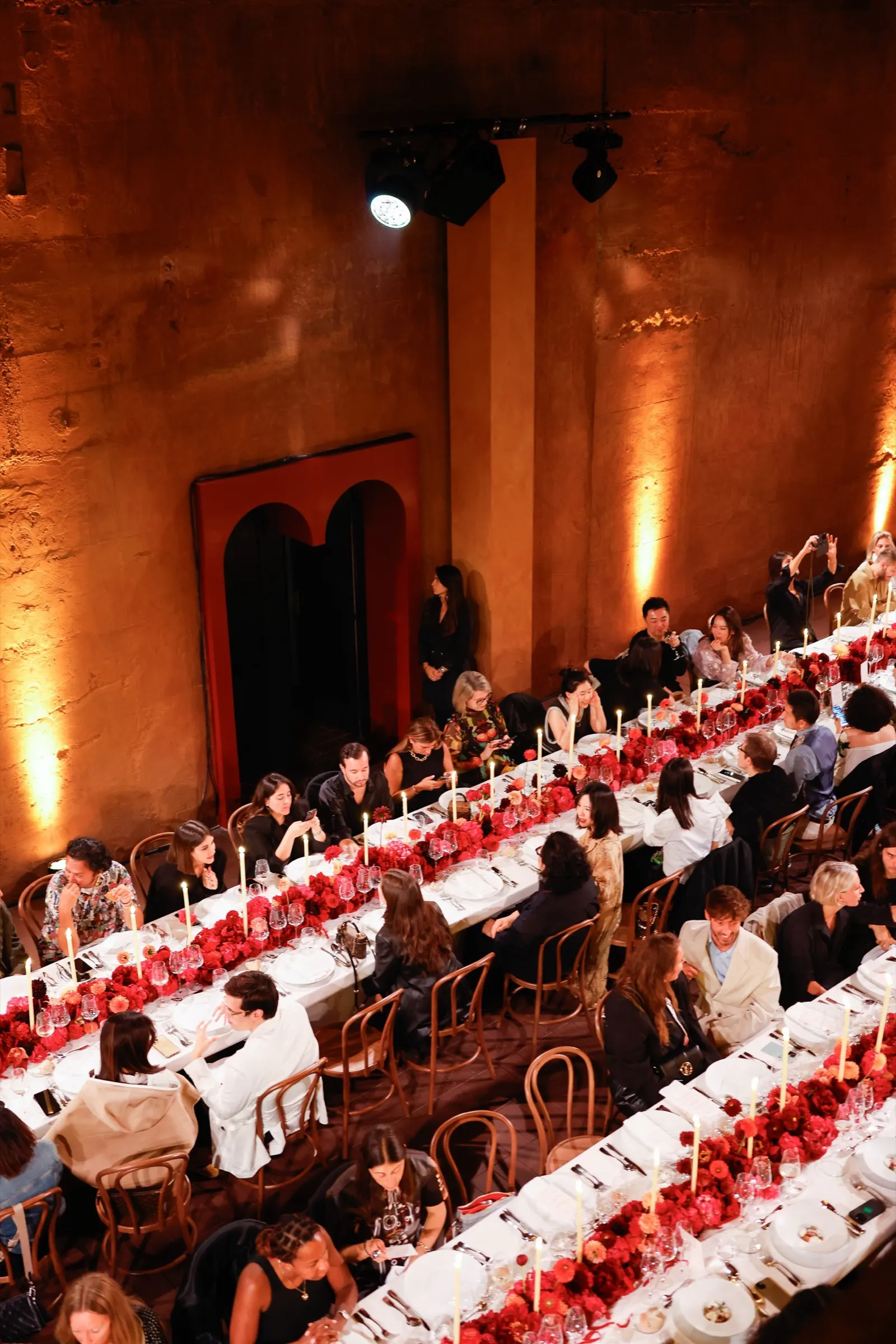
Former factories and converted warehouses offer high ceilings, volume and plenty of freedom for set-up. The clearest example in our portfolio is La Fábrica by Ricardo Bofill, in Sant Just Desvern, where Louis Vuitton held the gala dinner for its Cruise 2025 collection. Another unusual venue, in this case with immersive projections, is IDEAL, the digital arts centre, where we covered the New East Festival.
The light: in daylight it can be spectacular; at night it depends almost entirely on the production lighting.
What to watch:
- Very large spaces that go dark at night if the lighting only points at tables or the stage.
- Projections and coloured lights, which tint faces and products. The exposure has to respect the atmosphere without losing the people.
- Architecture: in a space like this it is worth photographing it by day and by night, as we did at La Fábrica.
Tip for organisers: if the venue is a draw in itself, include architecture and set-up shots in the brief and leave time before guests arrive.
Terraces and rooftops
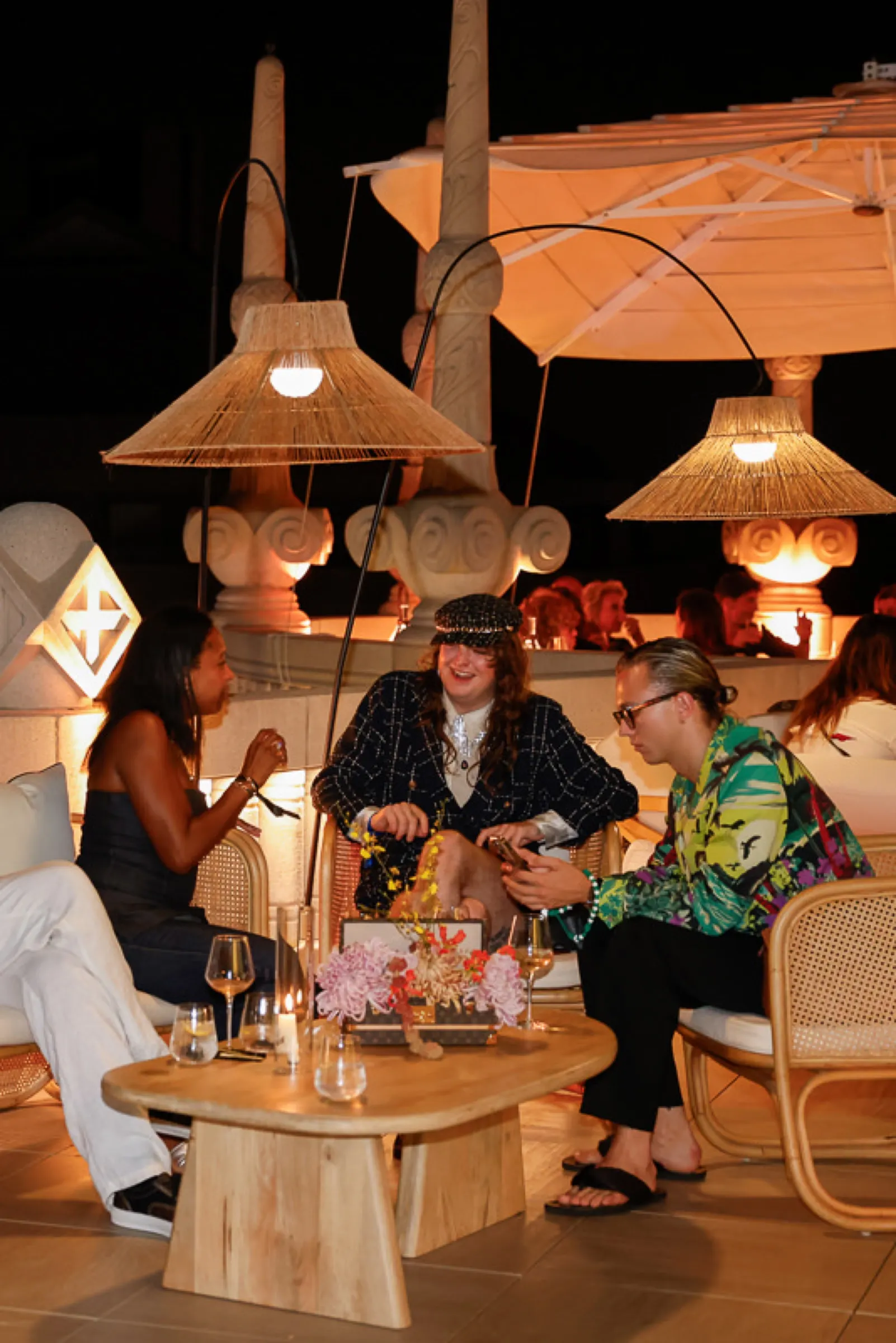
Barcelona has plenty of terraces with views, and they work very well for cocktails, dinners and team get-togethers. We have worked on terraces such as the one at Hotel Casa Fuster, where Louis Vuitton held a sunset cocktail, the ME Barcelona and the one for Alira Health’s team get-together.
The light: best at sunset; very harsh at midday and very scarce at night.
What to watch:
- Timing: sunset does not last long. If you want shots of the venue with the city behind, plan them for that moment.
- Night-time: without enough ambient lighting, photos lose detail and atmosphere.
- Wind and crowding: on small terraces there is little room to move without getting in the way.
Tip for organisers: ask the photographer to arrive before sunset to capture the set-up and details, and make sure the tables are lit well enough for the evening.
Outdoors, mountain and sea
Outdoor events give photos full of life, but depend on the weather and the time of day. Our portfolio has very different examples: the America’s Cup party at Tibidabo amusement park, with the city below; Aizon’s cocktail at Marina Port Vell, facing the boats; and Louis Vuitton’s hospitality space at Port Vell, with boat trips to follow the races.
The light: natural, changing and tricky at midday. At night, the production provides the lighting.
What to watch:
- Harsh midday light, with strong shadows on faces.
- Long distances: in a park or on the water, moments happen in different places and the photographer has to move between them.
- A plan B in case of rain or wind.
Tip for organisers: share the full route of the event and the timings for each area with the photographer. Outdoors, planning makes all the difference.
What helps in any venue
- Photos of the set-up or venue and the floor plan before the event.
- Timings including sunset, if part of the event is outdoors or on a terrace.
- Venue rules on flash, access and restricted areas.
- A contact from the technical team or venue for the day.
- Time to photograph the empty venue, before guests arrive.
To go further, see also what to photograph at your company convention and how much a corporate event photographer costs in Barcelona.
If you already have a venue and a date, see our corporate event photography in Barcelona page or tell us where it will be.